Istanbul · District
Metal fabrication and installation in Silivri
Holiday-home complexes along the coast; farmland and livestock farming inland.
This page also covers the surrounding area: Selimpaşa · Ortaköy · Değirmenköy
01Area
What kind of work comes up in Silivri?
Silivri, at Istanbul’s western end, combines two different economies: holiday-home complexes along the coast, and farming and livestock inland. The work we get follows this split — garden gates, railings and pergolas on the coast; barns, hay stores, storage buildings and field fencing inland.
On the coast, the topic we discuss most is wind. On a frontage open to the Sea of Marmara, a gate with solid infill or a louvered fence becomes a substantial sail, and that load goes straight into the posts and anchoring. Here we either leave gaps in the infill or upsize the structure and foundations to suit; using a post meant for a mesh panel fence on a louvered fence results in the line blowing over in the first strong wind.
Inland, livestock buildings take the lead. On beef and dairy cattle farms, the building’s dimensions are derived from the feed trough length, stall size and scraper channel line that the number of animals requires; once these are set, the column grid is placed so that it cuts across none of them. A column in the wrong place is a daily nuisance and cannot be removed later.
For greenhouses, inland Silivri is a steady line of work for us. The deciding factor here is wind: on open land a greenhouse faces the wind’s uplift, and the main job of the anchoring is to hold the structure down. Whether concrete socket footings or screw piles are used is determined by the ground; the two do not do the same job.
Demand profile
In Silivri, the coast and the interior generate two separate lists of work. On the coast, tied to the holiday-home complexes, the jobs are entrance gates, garden boundaries, louvered fences and railings; here, wind factors into every decision.
Inland, livestock fattening and greenhouse growing predominate. Barns, hay stores and greenhouse structures are a steady line of work, accompanied by machinery sheds and land perimeter fencing. What the two areas have in common is lightweight structures built on open land — in other words, structures where wind is decisive.
02Services
Featured work in Silivri
This list is based on the requests we receive most often from this area. You can also write to us about work that isn’t on the list.
- Steel BarnsWide-span barns designed around ventilation and hygiene.
- Mesh Panel FencesEconomical perimeter security with galvanized + PVC-coated wire mesh panels.
- Steel ConstructionStructural steel systems for warehouses, workshops and commercial buildings.
- Villa Driveway GatesSliding, double-leaf swing and cantilever sliding garden gates, made to measure.
- Louvered FencesA modern fence system with aluminum slats that provides privacy.
03Local conditions
What drives our decisions in Silivri?
Climate, ground, wind and access conditions directly change our decisions on sections, surface treatment and installation. This section explains what we do differently in this area, and why.
01
The sail effect on frontages open to the Sea of Marmara
On the coast, the degree of closure translates directly into wind load. As the slat gaps of a louvered fence are closed up, the fence stops letting the wind through and transfers the entire load to the posts; on a fully solid run, the post section and foundation depth increase significantly. On a gate, the same logic applies to the leaf frame and the hinges. If this choice between privacy and strength is not discussed at the start, the consequences show within a few seasons.
02
Uplift and anchoring on open land
On greenhouses and lightweight roofs, the wind mostly acts to pull the structure upward; the job of the anchoring is not to carry the structure but to hold it down. This makes the soil type critical: concrete socket footings and screw piles do not do the same job, and which one is right cannot be said without looking at the ground. On plots with a high water table, the decision again depends on the ground.
03
Span and layout in livestock buildings
A barn’s dimensions are derived not from the number of animals but from the span and farm layout that number requires. The feed alley, manure scraper line and pen layout determine the clear span; until these are settled, the sections cannot be calculated. The type of livestock is also an input, because barn height and ventilation needs vary with it.
04From the field
Situations we often encounter in this area
We don’t give client names, project names or dates; what we describe is the situation itself and how it was solved.
An extension adjoining an existing barn
The most common job when a farm grows. In most cases it is possible; what is critical is that the two structures work independently of each other. The new steel section sits on its own structure so that it puts no load on the existing building, and the connection between them is designed to accommodate movement. We do not plan an adjoining extension without seeing the condition of the existing building’s foundations.
The fence doesn’t stop small animals
On long runs, mesh panel fencing is the most economical solution per meter; it marks the boundary and prevents passage. But standard panel mesh spacing does not stop small animals getting through. If that is needed, a section with a finer mesh is added at the bottom, a separate strip is run beneath the panels, or a concrete curb is built. If the need is mentioned at the start, the line is built correctly in one go.
05Models
The models we’re asked about most in this area
All are made to measure; the model is a starting point. Changes can be made to suit the dimensions and the opening.

Steel Barn Building
Steel Barns · Galvanized or painted

Galvanized Mesh Panel Fence System
Mesh Panel Fences · Green (RAL 6005), anthracite or white
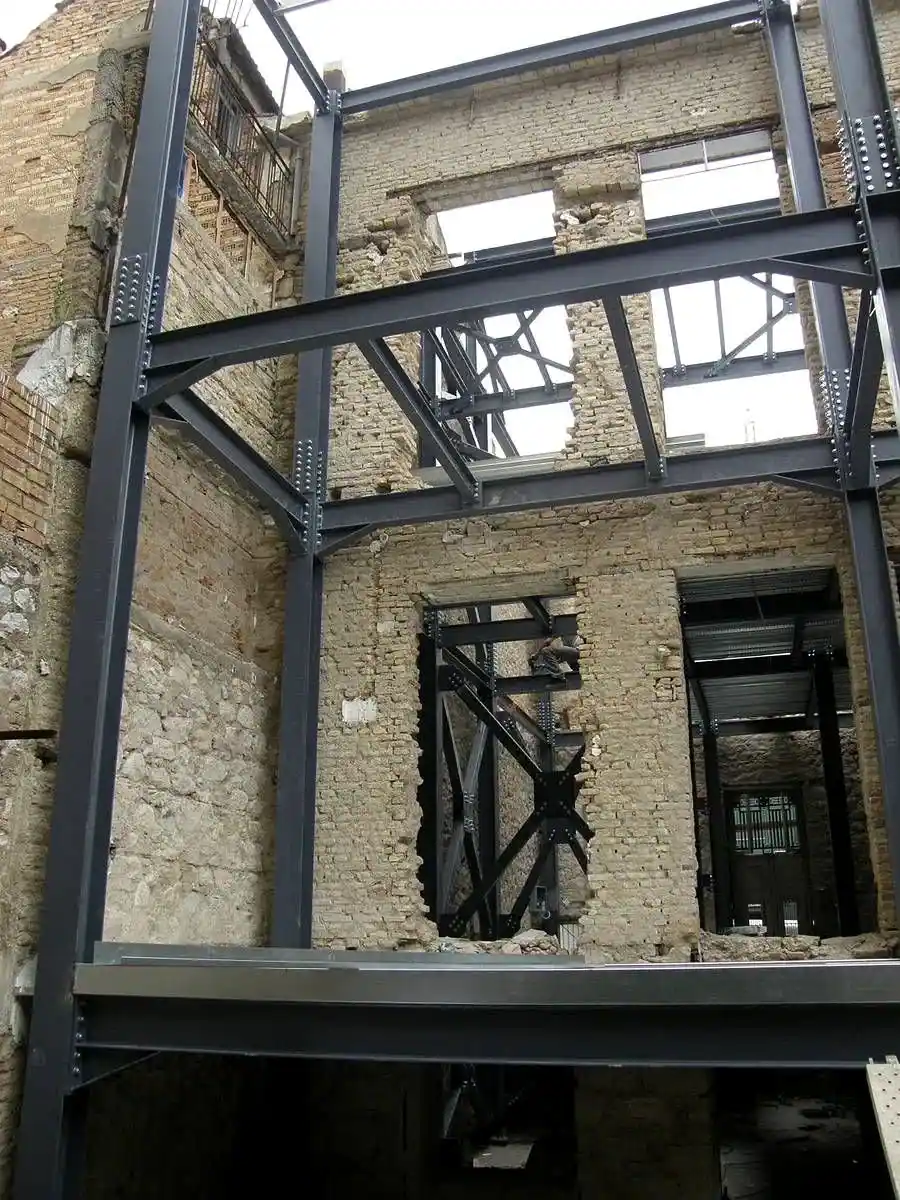
Single-Story Steel-Frame Building
Steel Construction · Primer + paint or galvanized

Anthracite Horizontal-Slat Sliding Villa Gate
Villa Driveway Gates · Anthracite gray (RAL 7016)
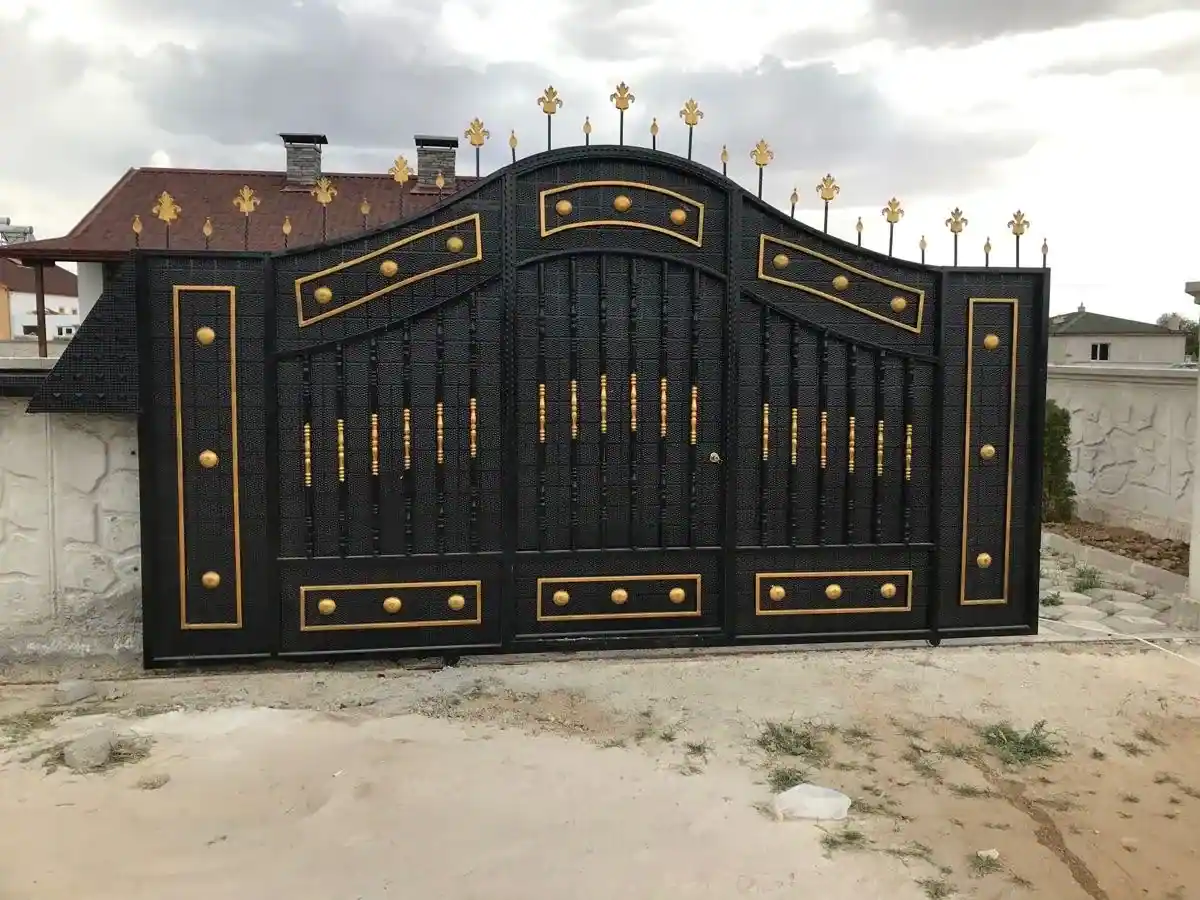
Double-Leaf Wrought Iron Villa Gate
Villa Driveway Gates · Matte black with antique gold patina

Aluminum Slat Louvered Fence
Louvered Fences · Anthracite, gray, white or wood-pattern
06Delivery and installation
How do we get from Arnavutköy to Silivri?
Delivery from Arnavutköy to Silivri can be made in a single trip; for long parts, the route and delivery time are planned in advance. On farm plots away from the coast, we mark the road the installation vehicle can use during the site survey and, if necessary, unload the part at a point near the site and carry it the last stretch by hand.
For agricultural buildings, measuring is done in a single visit; for coastal jobs, the frontage orientation and wind exposure are noted on the same visit. Installation time depends on the number of bays, the ground and the anchoring method. We state the exact number of days in the quote after the site survey.
We have no branches or dealers; all fabrication is done in our own workshop in Arnavutköy. Price and lead time depend on the size of the job, the opening and the installation conditions — so we don’t quote a figure or a number of days up front here. Send your measurements and location, and we’ll work it out for your project.
07FAQ
Frequently asked questions for Silivri
Can a louvered fence be built on a windy frontage?
It can, but the post section and foundation depth are calculated for that load. The more closed the fence, the higher the wind load; a fully solid louvered fence carries several times the horizontal force of a mesh panel fence of the same height. During the site survey we assess your location and whether the run faces open, exposed ground.
Can I expand my existing barn?
On most farms, yes; building an adjoining steel section next to an existing barn is work we do regularly in inland Silivri. What is critical is that the two structures can move independently and that the extension does not cut off the existing ventilation flow. A section added in the wrong place disrupts the airflow of the existing barn.
Which fence should I use to enclose a field?
On long runs, mesh panel fencing is the most economical solution per meter; it marks the boundary and prevents passage. If you also want to keep small animals from getting through, a finer-mesh strip is added at the bottom or a concrete curb is built beneath it. If the land slopes, the fence steps down in stages; the stepping plan is drawn up by walking the entire run.
Would a fully closed louvered fence be a problem?
It can be done; the trade-off is a larger post section and deeper foundations. The more closed the fence, the higher the wind load; on a frontage open to the Sea of Marmara, a fully solid run carries significantly more load than one with gaps. If you want privacy, tell us — we will set the section and post spacing accordingly.
Is a soil survey required for anchoring my greenhouse?
We do not ask for a survey on every plot, but we do not decide without seeing the ground. Concrete socket footings and screw piles do not do the same job; a solution that works on firm ground can settle on soft ground or ground with a high water table. If you have an existing survey, share it; if not, we will decide by looking at the ground during the site survey.
How large a herd can your fattening barns accommodate?
We do not set an upper limit; the dimensions are determined not by the number of animals but by the span and farm layout that number requires. Tell us the number of animals, the type of livestock and your feeding and manure-scraping arrangement, and we will work out the clear span and sections accordingly.
08Nearby areas