
Türkiye · Province
Metal fabrication and installation in Bursa
Villas and gated communities in Nilüfer, facility work along the industrial corridor, snow loads on the foothills of Uludağ.
This page also covers the surrounding area: Nilüfer · İnegöl · Gemlik · Mudanya
01Area
What kind of work comes up in Bursa?
Bursa has three different settings at once, and requests differ from the outset depending on which district they come from. In the villa areas in and around Nilüfer, entrance gates, automation and garden fencing lead. Along İnegöl and the organized industrial corridor, there is warehouse, roof and mezzanine work for the furniture and automotive supply industries. On the Mudanya–Gemlik coast, the effect of the sea comes into the calculation.
On the northern and eastern slopes rising toward Uludağ, snow load drives the design. Unlike wind, snow is a load that stays on the roof for a long time; roof slope, purlin spacing and ridge detail are set accordingly. Build the same roof on the flat plain and you may end up with unnecessary cost; build it on the slope and you may end up with an inadequate section. Snow load is calculated for the location; no single standard section is right for all of Bursa.
For furniture makers along the İnegöl corridor, the most common job is gaining storage space by adding a mezzanine inside an existing building. Two things are decisive here: the clear height a forklift needs underneath, and the load per square meter on top. Storing board and finished goods creates heavy loads; the floor and beam sections are chosen on that basis. Stating the load correctly from the start is much cheaper than reinforcing later.
On the coast, material choices change. In Gemlik and Mudanya, salty humidity causes faster wear than inland; here we recommend a galvanized structure and stainless steel fasteners. If the screws and hinges used outdoors don’t last as long as the main body, they drag the whole job down with them.
Demand profile
Demand in Bursa splits three ways by district. From the villa areas in and around Nilüfer: entrance gates, automation and garden fencing; from İnegöl and the organized industrial corridor: warehouse steel structures, roofs and mezzanines; and from the Gemlik–Mudanya coast: the same products again, but with different material decisions.
Mezzanines are where we are busiest. In a province with a strong furniture and automotive supply industry, gaining storage space without enlarging the existing building is the most common solution; that makes mezzanines stand out in Bursa far more than in other provinces.
02Services
Featured work in Bursa
This list is based on the requests we receive most often from this area. You can also write to us about work that isn’t on the list.
- Villa Driveway GatesSliding, double-leaf swing and cantilever sliding garden gates, made to measure.
- Steel ConstructionStructural steel systems for warehouses, workshops and commercial buildings.
- Mezzanines & Setback FloorsA steel floor that doubles the usable area within an existing building.
- Steel RoofsComplete roof structures, with purlins, trusses and roofing.
- Mesh Panel FencesEconomical perimeter security with galvanized + PVC-coated wire mesh panels.
03Local conditions
What drives our decisions in Bursa?
Climate, ground, wind and access conditions directly change our decisions on sections, surface treatment and installation. This section explains what we do differently in this area, and why.
01
Altitude-dependent snow load
On the northern and eastern slopes rising toward Uludağ, snow load drives the design. Unlike wind, snow is a load that stays on the roof for a long time, and it increases with altitude. Use the same roof section on the flat plain and you get unnecessary cost; use it on the slope and you get an inadequate structure. That is why we do not use one standard section across Bursa; slope, purlin spacing and ridge detail are set according to location.
02
Heavy loads on mezzanines
Board, finished goods and archives create very different loads; the load per square meter is the main input in a mezzanine calculation. Board stored for furniture production means a load many times greater than an office archive on the same area. The clear height a forklift needs underneath and the load on top have to be resolved together; if either changes later, the job is recalculated.
03
Salty humidity along the gulf coast
In Gemlik and Mudanya, salty humidity causes faster wear than inland. Here we recommend a galvanized structure and stainless steel fasteners. The point to watch is this: if the screws and hinges used outdoors are not chosen to last as long as the main body, they drag the whole job down. What deteriorates fastest is often not the metal itself but the small parts holding it together.
04From the field
Situations we often encounter in this area
We don’t give client names, project names or dates; what we describe is the situation itself and how it was solved.
The use of a mezzanine changes after it is built
A common situation: a mezzanine was built for light storage, and a few years later heavier goods started going on it. Because the floor and beams were not chosen for that load, sagging or vibration appears. The way to prevent this is to state not today’s use but the heaviest use you foresee; the difference in section is usually small, while reinforcing later is a big job.
Building a roof on the slope to a design made for the plain
Customers who already have another facility’s design want to proceed with the same sections. If there is a difference in altitude, we do not accept this: a section that is right on the plain can be inadequate under snow load on the slope. What we do is recalculate the existing design for the location; the architectural language and appearance are kept, while the structural values change.
05Models
The models we’re asked about most in this area
All are made to measure; the model is a starting point. Changes can be made to suit the dimensions and the opening.

Anthracite Horizontal-Slat Sliding Villa Gate
Villa Driveway Gates · Anthracite gray (RAL 7016)
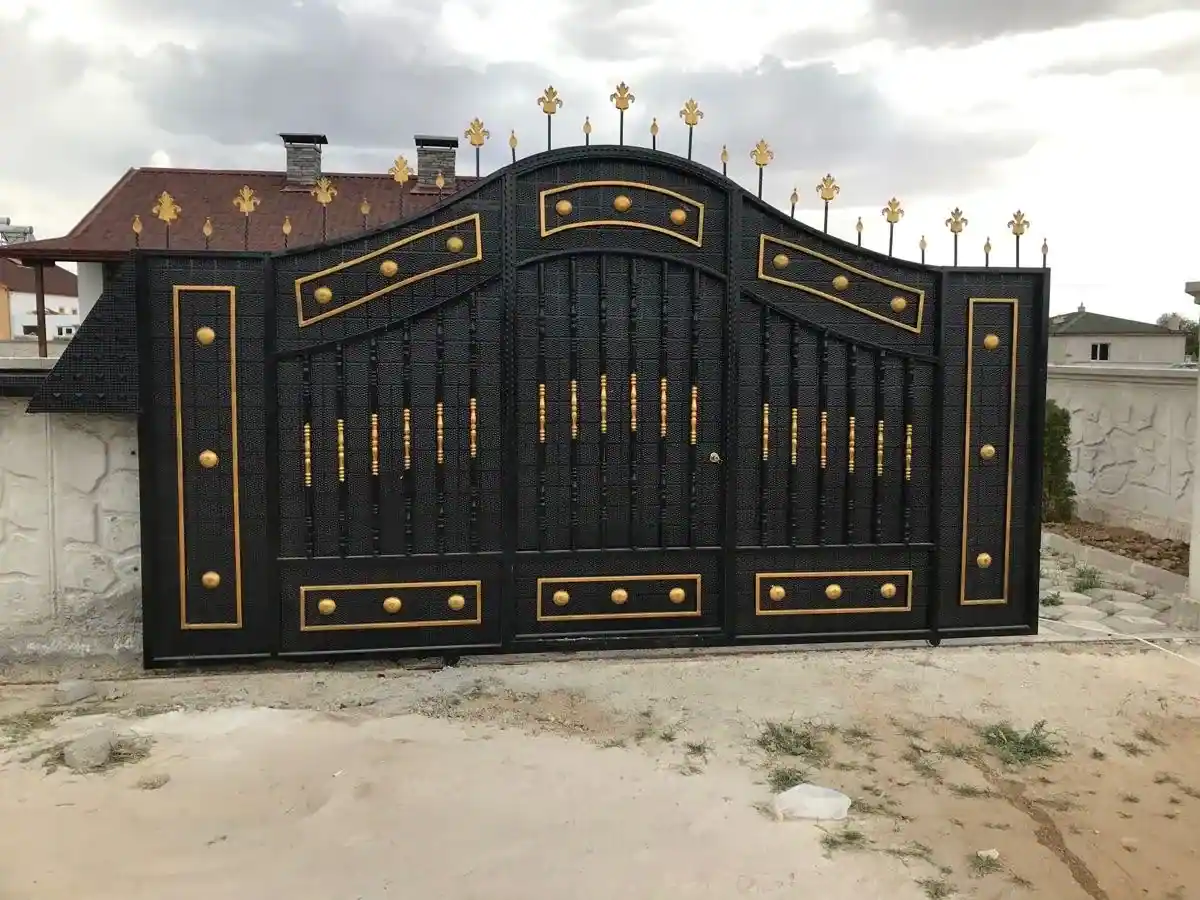
Double-Leaf Wrought Iron Villa Gate
Villa Driveway Gates · Matte black with antique gold patina
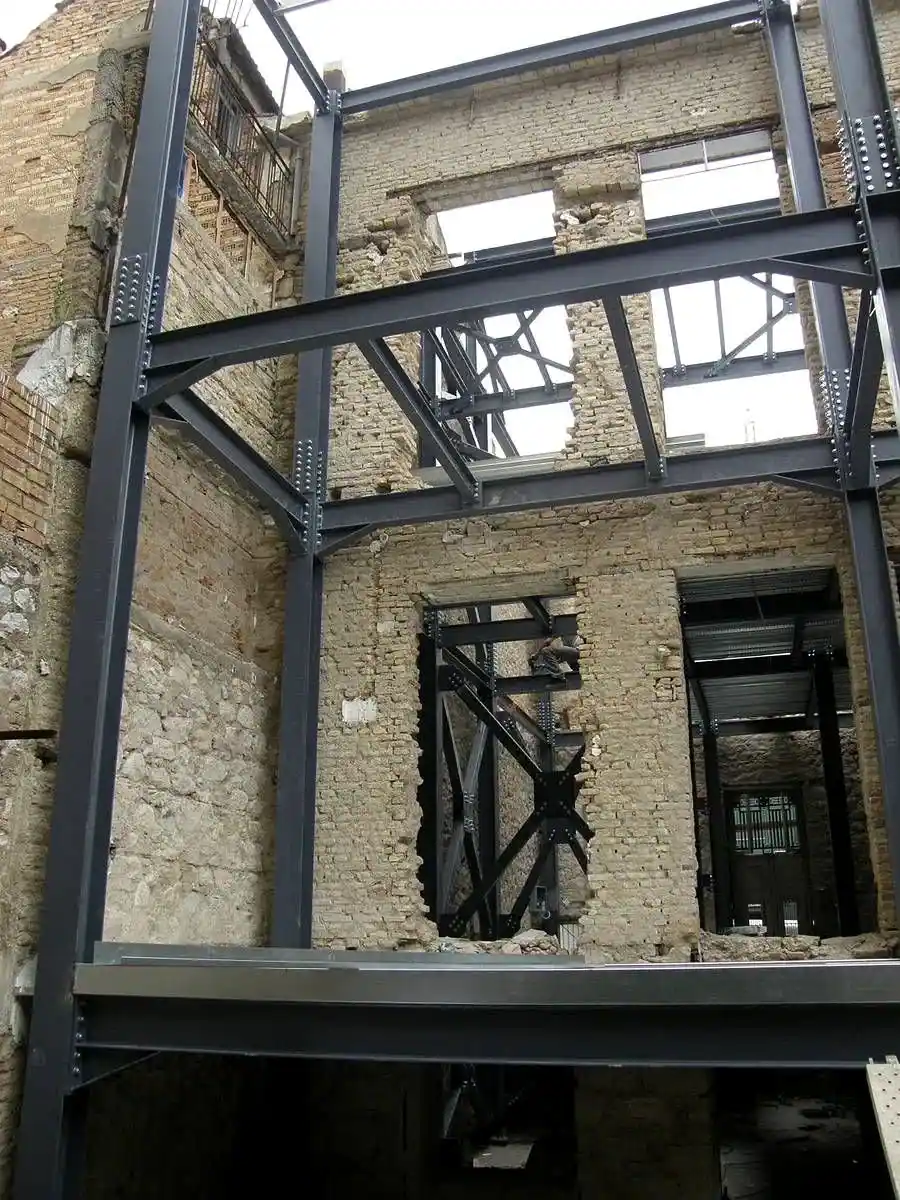
Single-Story Steel-Frame Building
Steel Construction · Primer + paint or galvanized
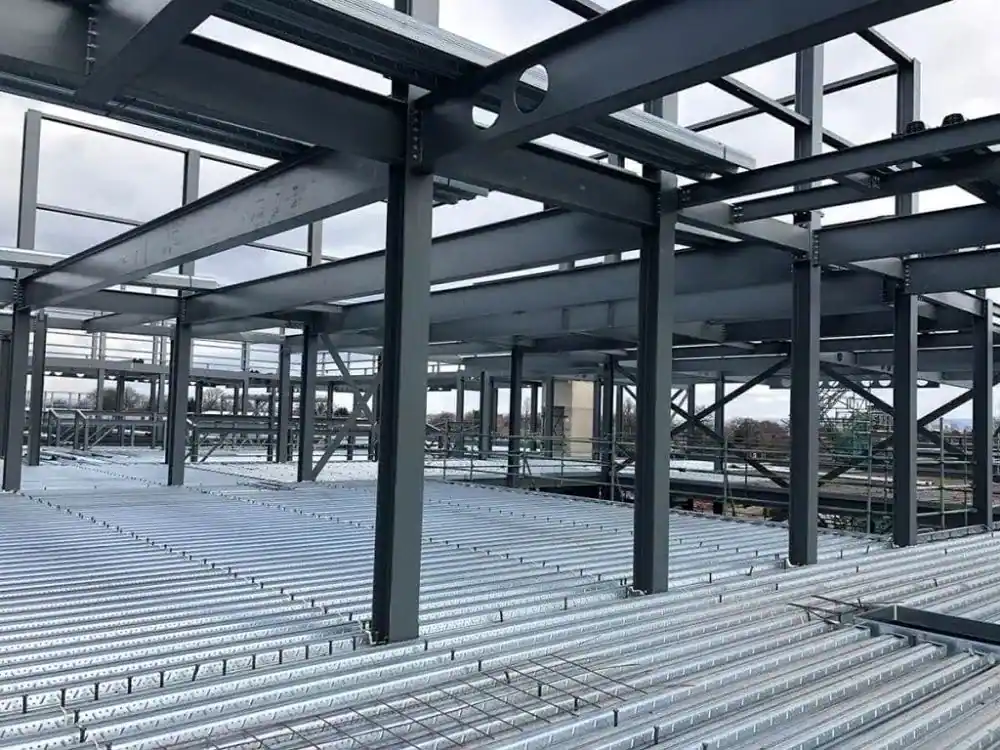
Steel Mezzanine System
Mezzanines & Setback Floors · Primer + paint

Steel Roof System
Steel Roofs · RAL of your choice to match the roofing

Galvanized Mesh Panel Fence System
Mesh Panel Fences · Green (RAL 6005), anthracite or white
06Delivery and installation
How do we get from Arnavutköy to Bursa?
Shipments from Arnavutköy to Bursa are planned via the gulf crossing. For large structural parts, the route and delivery time are set in advance; installation time and crew planning are stated in the quote according to the size of the job.
For facility work, measuring is done in two stages: the dimensions and structural condition of the existing building, then verification before fabrication. For shipments via the gulf crossing, parts are sized to suit transport. Installation time depends on the size of the job and access; we state the exact number of days in the quote.
We have no branches or dealers; all fabrication is done in our own workshop in Arnavutköy. Price and lead time depend on the size of the job, the opening and the installation conditions — so we don’t quote a figure or a number of days up front here. Send your measurements and location, and we’ll work it out for your project.
07FAQ
Frequently asked questions for Bursa
How does snow load on the Uludağ side affect a roof?
Unlike wind, snow is a load that stays on the roof for a long time, and it increases with altitude. Slope, purlin spacing and ridge detail are set accordingly. Send us your site’s altitude and roof dimensions, and we will show in the quote which section is right for that location.
What information should I have ready for a mezzanine in my factory?
Three pieces of information are enough: the existing ceiling height, the dimensions of the area the mezzanine will occupy, and what will be stored on top. Board, finished goods and archives create very different loads; this information directly determines the choice of beams and floor.
Does the choice of materials change in Gemlik and Mudanya?
It does. On the coast, salty humidity accelerates wear, so we recommend a galvanized structure and stainless steel fasteners. The type of fastener matters as much as the quality of the paint; the screws are often what deteriorates first.
What load should I state for a mezzanine in my İnegöl factory?
Not today’s use, but the heaviest use you foresee. Board, finished goods and archives are very different loads; beams and floor are chosen accordingly. A higher figure given at the start usually has only a small effect on section size, whereas reinforcement needed later turns into a big job.
Is there a standard section for my roof on the Uludağ side?
No, and rightly so. Snow load increases with altitude; a section that is adequate on the plain can be inadequate on the slope. Send us your site’s altitude and roof dimensions, and we will show in the quote which slope and purlin spacing are right for that location.
I have another facility’s design. Can you build from it?
We can, keeping its architectural language and appearance, but we recalculate the structural values for your location. These are things that change with snow load, wind load and ground conditions. Send us the design, and we will show you item by item what we keep, what we change and why.