

04 / Collection
Steel Buildings and Steel Construction
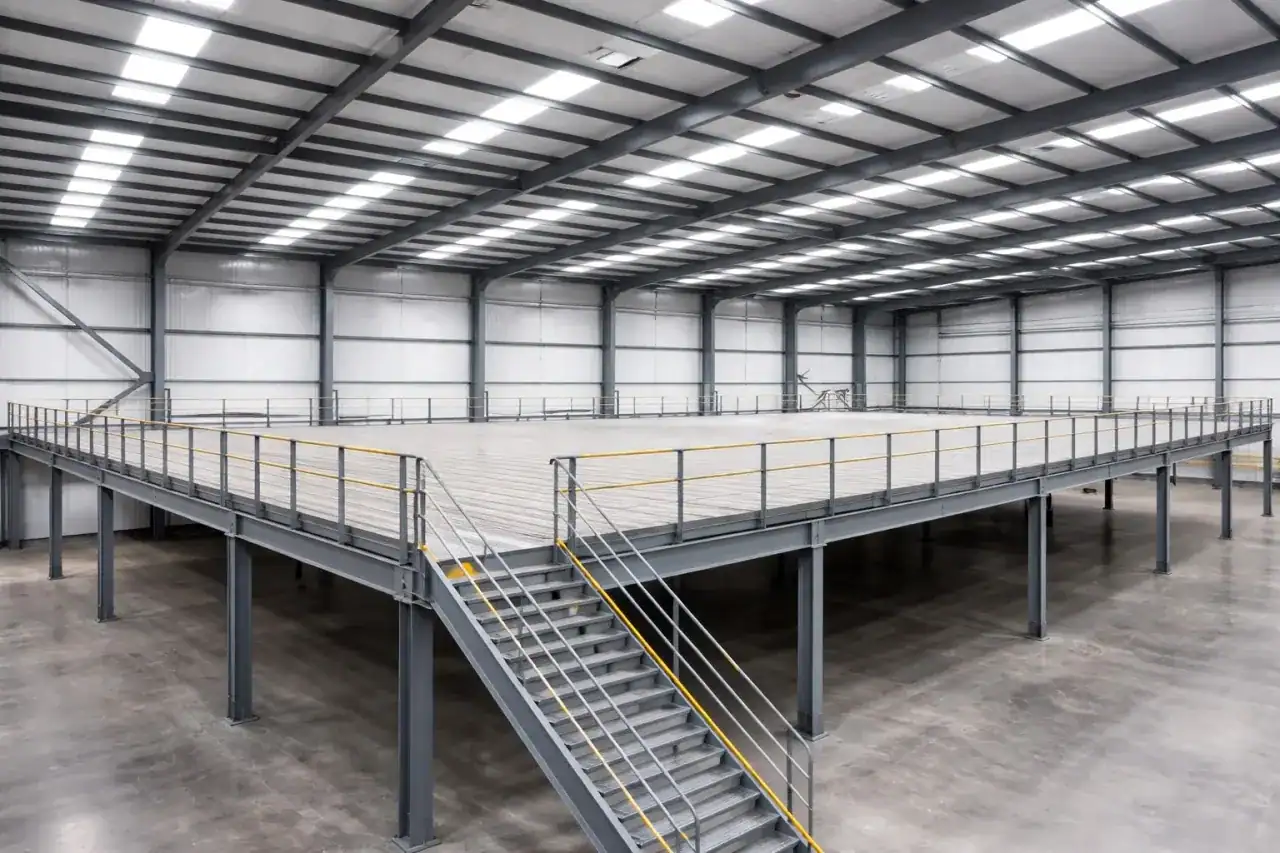
In a steel building, quality is determined not on site but before it: in the structural calculation, the anchor layout and the precision of workshop fabrication. We handle warehouses, workshops, mezzanines, barns and greenhouses ourselves, from the design stage through to handover.
01Services
Work covered by Steel Buildings
Fabrication of steel structures, mezzanines, steel barns and greenhouses.



02Featured
Featured models from this collection
03Approach
Design, fabrication and installation with a single point of contact
- Structural design comes firstWe do not start fabrication until the calculations and design are done; we do not take on jobs that would skip this step.
- The anchor template goes to siteThe plate and bolt layout is finalized before the foundation concrete is poured, so there is no need to break out concrete.
- Workshop fabricationMost of the work is prepared indoors, reducing time on site and dependence on the weather.
- We discuss the constraint up frontColumn-free span, clear height, ventilation or snow load — whichever one governs is settled in the first meeting.
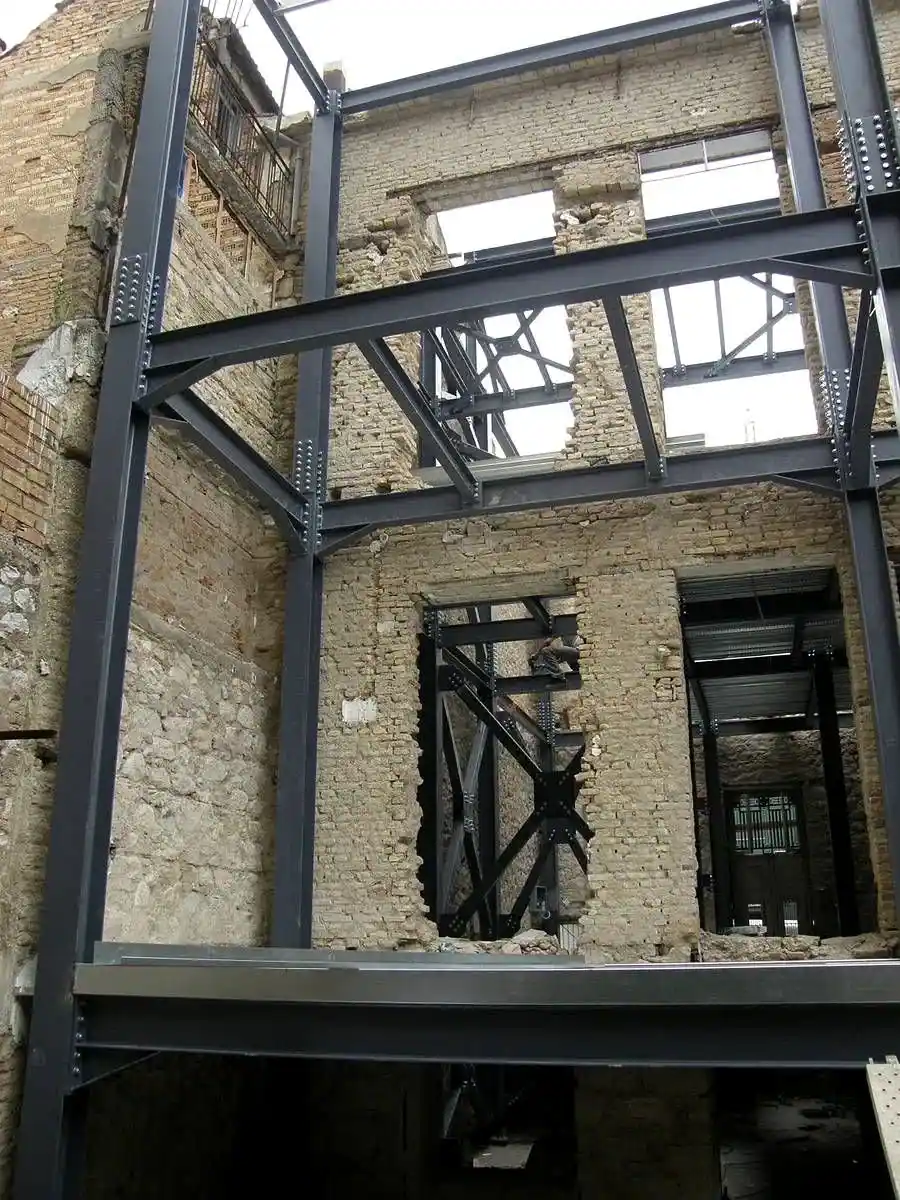
In steel construction, the most expensive mistakes happen where the work is split up. One office draws the structural design, a workshop does the fabrication and yet another crew takes on the installation. All three believe they have done their own part correctly, but when the bolt spacing on the base plate does not match the anchor bolts left in the foundation, the site pays the price. At that point, the only option is to break out the concrete and drill again — work that is both costly and weakens the bearing capacity of the foundation.
We run these three steps as one continuous process. Once the structural calculation and drawings are done, the base plate layout is finalized before the foundation concrete is poured; our own crew takes the template to the site. In the workshop, cutting and drilling are done to this template. On installation day the parts fit into place, with no corrections on site.
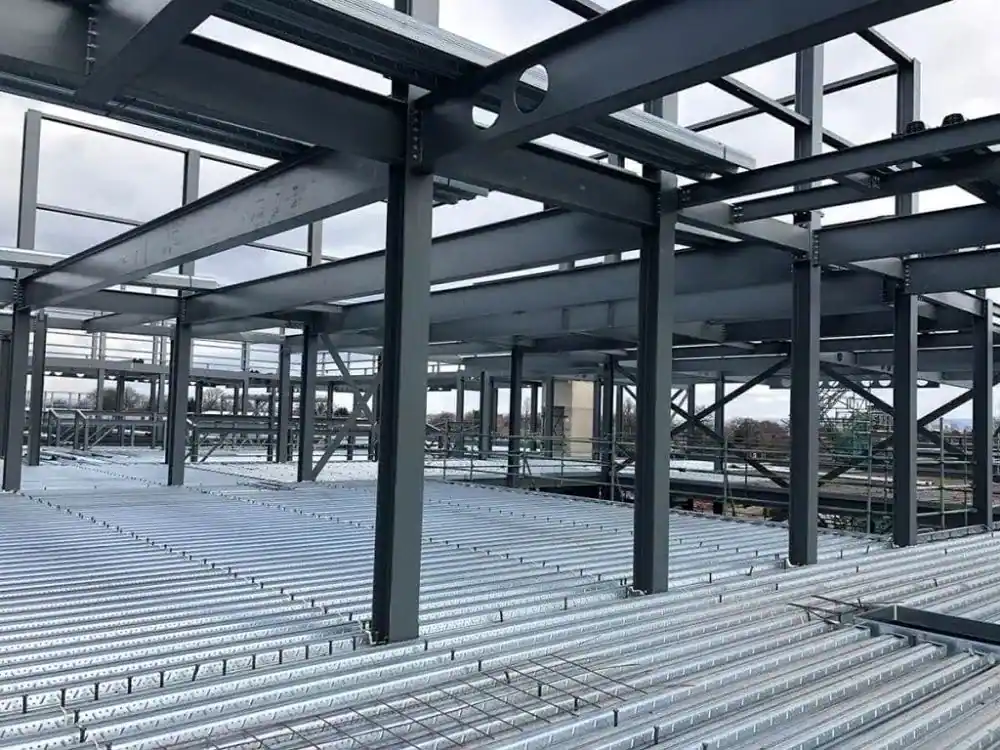
The second benefit of workshop fabrication is time on site. Most of the columns, beams and purlins are prepared indoors, regardless of the weather; all that remains on site is assembly and, where needed, on-site welding. This is where the clearest advantage over reinforced concrete shows.
The governing constraint also changes with the building type. In warehouses and workshops it is the column-free span; in mezzanines, the clear height of the lower floor; in barns, ventilation; in greenhouses, wind and snow load. Discussing this constraint at the very start prevents decisions that later make the building unusable: a mezzanine with a lower floor left too low, a barn without ventilation or a greenhouse frame with undersized sections cannot be fixed afterward.
Surface treatment matters especially here, because in steel buildings corrosion starts where you cannot see it: at connections, at bolt heads and on the surfaces where purlins and beams meet. Since these areas cannot be reached after installation, paint and, where needed, galvanizing are applied in the workshop before the parts go to site. On site, only the welded points are touched up.
04FAQ
Frequently asked questions about Steel Buildings
Does a steel building need a soil investigation?
Because foundation design depends on the bearing capacity of the soil, a soil investigation comes as part of the process for buildings that require a permit. On small-scale jobs, the existing ground conditions are assessed during the site survey; we do not leave the decision to guesswork.
If I want to expand the building later, can it be dismantled or added to?
This is one of the clearest advantages of a steel building. A structure assembled with bolted connections can be dismantled and moved, or extended sideways. If you might expand later, tell us at the start so the column grid and bracing layout can be planned accordingly.
Do you prepare the structural design yourselves?
The calculation and drawing process is a stage we run ourselves; who signs the design depends on the scope of the work and its permit status. If the building requires a permit, we discuss this clearly during the site survey and plan the necessary steps together.
Is a steel building really faster than reinforced concrete?
Time on site is noticeably shorter, because most of the work is done in the workshop. But the total time also includes design, fabrication and surface treatment. We give you a realistic picture after the site survey; we do not think it is right to answer “how many days will it take?” without taking measurements.
Can a mezzanine be built inside an existing warehouse?
In most cases, yes. Two dimensions decide it: the clear height that will remain on the lower floor, and whether the existing floor can carry the additional load. In a warehouse with forklift traffic, the lower-floor height is set by the vehicle and its loading height; if that clearance cannot be met, a mezzanine does not improve the space — it makes it unusable.
Do you also insulate the building?
When sandwich panel cladding is used, insulation is handled in a single application. If a different insulation system is wanted, the structure is planned accordingly; we discuss the details at the design stage.
Do you take on small-scale jobs too?
Yes — for small spans such as garages, canopies and single-story workshops, we work with box-section framing instead of lattice trusses. At this scale, we show you with calculations which system is economical.
05From the field
Work we have completed in this category
The photos are from Saray Metal’s own projects; they are not illustrative images.
Steel Buildings
Steel construction Steel construction Steel construction Steel construction Steel stair fabrication Steel construction Steel construction Steel construction
All photos are from Saray Metal’s own projects. Tap a photo to open it uncropped. If you would like to see more, message us on WhatsApp.
06Other categories
Often requested alongside this work


If you are not sure which category fits, write to us
Send a photo or measurements; we will tell you which category the job falls under and how to solve it.