
Türkiye · Province
Metal fabrication and installation in Izmir
Salty humidity and holiday-community rules on the coast; industrial and agricultural buildings inland.
This page also covers the surrounding area: Urla · Çeşme · Seferihisar · Bornova
01Area
What kind of work comes up in Izmir?
In Izmir, what shapes our work list is distance from the coast. In the holiday-home and villa areas along Urla, Çeşme and Seferihisar, demand for entrance gates, garden fencing, pergolas and railings is strong. Bornova and the organized industrial corridor bring warehouse and roof jobs. The two areas do not share the same material decisions.
On the coast, salty humidity is the deciding factor. On a plot near the sea, metal wears noticeably faster than inland, and the wear starts at the weakest points: cut edges, holes drilled on site and fasteners. Here our standard approach is a galvanized body, stainless steel fasteners and all cutting and drilling finished before painting.
The second issue is the inside of hollow-section profiles. Humid air getting inside a box section starts corrosion that cannot be seen from outside; the profile looks sound from the outside while thinning from within. On coastal jobs, we seal the profile ends and leave drain holes where water could collect. This detail is one of the things that directly determine service life on the coast.
The third is the rules of holiday communities. In most communities, additions to the facade and garden boundary are subject to management approval, with restrictions such as color, height and solid-to-open ratio. After the site survey, we provide our drawing in a form you can submit to management; if there are restrictions, we confirm together that we comply with them before fabrication starts.
The industrial corridor inland brings an entirely different work list. Demand from Bornova, Kemalpaşa and the organized industrial zones is for warehouse steel structures, roof renewal, mezzanines and site fencing. The input most often overlooked in these jobs is the load that will later be hung from the roof: ventilation ducts, lighting runs, pipe hangers and, where applicable, cranes. A crane added later often means strengthening the structure; if the possibility is mentioned at the site survey, the cost stays small.
Demand profile
Demand in Izmir divides by distance from the coast. Along Urla, Çeşme and Seferihisar: entrance gates, garden fencing, pergolas and railings; along Bornova and Kemalpaşa: warehouse steel structures, roof renewal, mezzanines and site fencing.
A feature of coastal demand is that it is the decisions, not the products, that differ. The same gate and the same railing are requested, but the scope of surface treatment and the choice of fasteners change. That is why one of the first things we ask when preparing a quote here is how far the plot is from the sea.
02Services
Featured work in Izmir
This list is based on the requests we receive most often from this area. You can also write to us about work that isn’t on the list.
- Villa Driveway GatesSliding, double-leaf swing and cantilever sliding garden gates, made to measure.
- Villa Pedestrian GatesSingle-leaf pedestrian gates in the same design language as the driveway gate.
- Canopies and PergolasEntrance canopies, carports, pergolas and winter gardens.
- Wall-Top RailingsWrought iron and modern railing designs that complete the garden wall.
- Steel ConstructionStructural steel systems for warehouses, workshops and commercial buildings.
03Local conditions
What drives our decisions in Izmir?
Climate, ground, wind and access conditions directly change our decisions on sections, surface treatment and installation. This section explains what we do differently in this area, and why.
01
Corrosion starting inside hollow sections
On the coast, the most insidious deterioration happens inside the box section. Humid air getting in starts corrosion that cannot be seen from outside; the profile looks sound from the outside while thinning from within. That is why, on coastal jobs, we seal the profile ends and leave drain holes where water could collect. This single detail is one of the things that determine service life on the coast.
02
Cut edges and holes drilled on site
In salty air, deterioration starts where the protective layer is thinnest; these are always cut edges, holes drilled afterward and fasteners. That is why we finish all cutting and drilling in the workshop, before painting. A hole drilled on site means an unprotected edge, and even with the best material, deterioration starts there.
03
Approval and installation windows in holiday communities
In many communities in and around Çeşme, additions to the facade and garden boundary are subject to management approval; color, height and solid-to-open ratio may be defined. During the season, vehicle access and hours for noisy work are also restricted. Together, these two shape the installation schedule more than the work itself.
04From the field
Situations we often encounter in this area
We don’t give client names, project names or dates; what we describe is the situation itself and how it was solved.
Same product, different scope on two plots
A common source of confusion: the price and scope of a job on a neighboring plot are cited as an example, but the two plots differ in distance from the sea and exposure to the prevailing wind. On a seafront plot the galvanizing scope widens, while on a plot a few hundred meters inland it may stay narrower. We set the scope according to the plot’s exposure and explain in the quote where the difference comes from.
Lines hung from the roof later
In facilities along the Bornova and Kemalpaşa corridor, this is the input most often overlooked: ventilation ducts, lighting runs, pipe hangers and, where applicable, cranes all bear on the roof structure. A crane added later often requires strengthening. If the possibility is mentioned at the site survey, the difference in section stays small; if it comes up later, the work is almost redone from scratch.
05Models
The models we’re asked about most in this area
All are made to measure; the model is a starting point. Changes can be made to suit the dimensions and the opening.

Anthracite Horizontal-Slat Sliding Villa Gate
Villa Driveway Gates · Anthracite gray (RAL 7016)
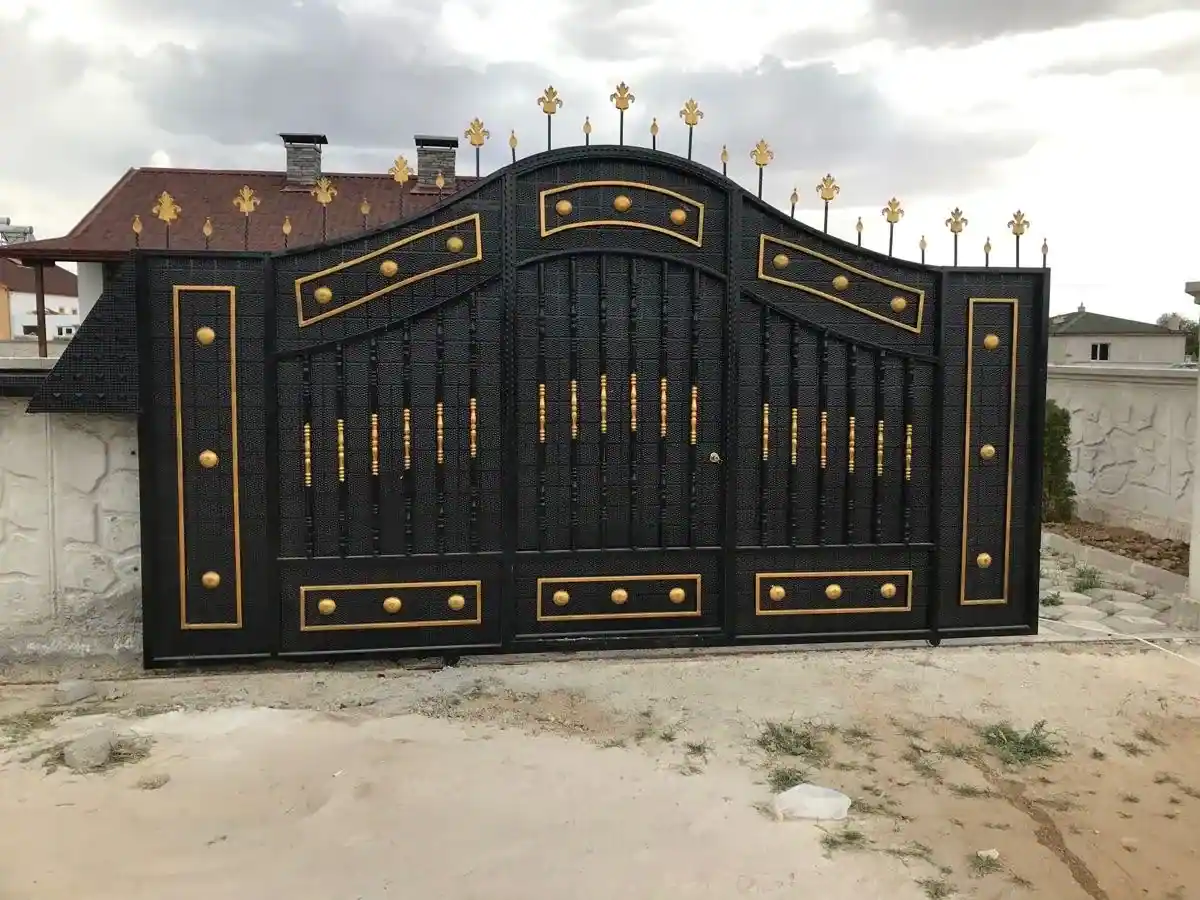
Double-Leaf Wrought Iron Villa Gate
Villa Driveway Gates · Matte black with antique gold patina
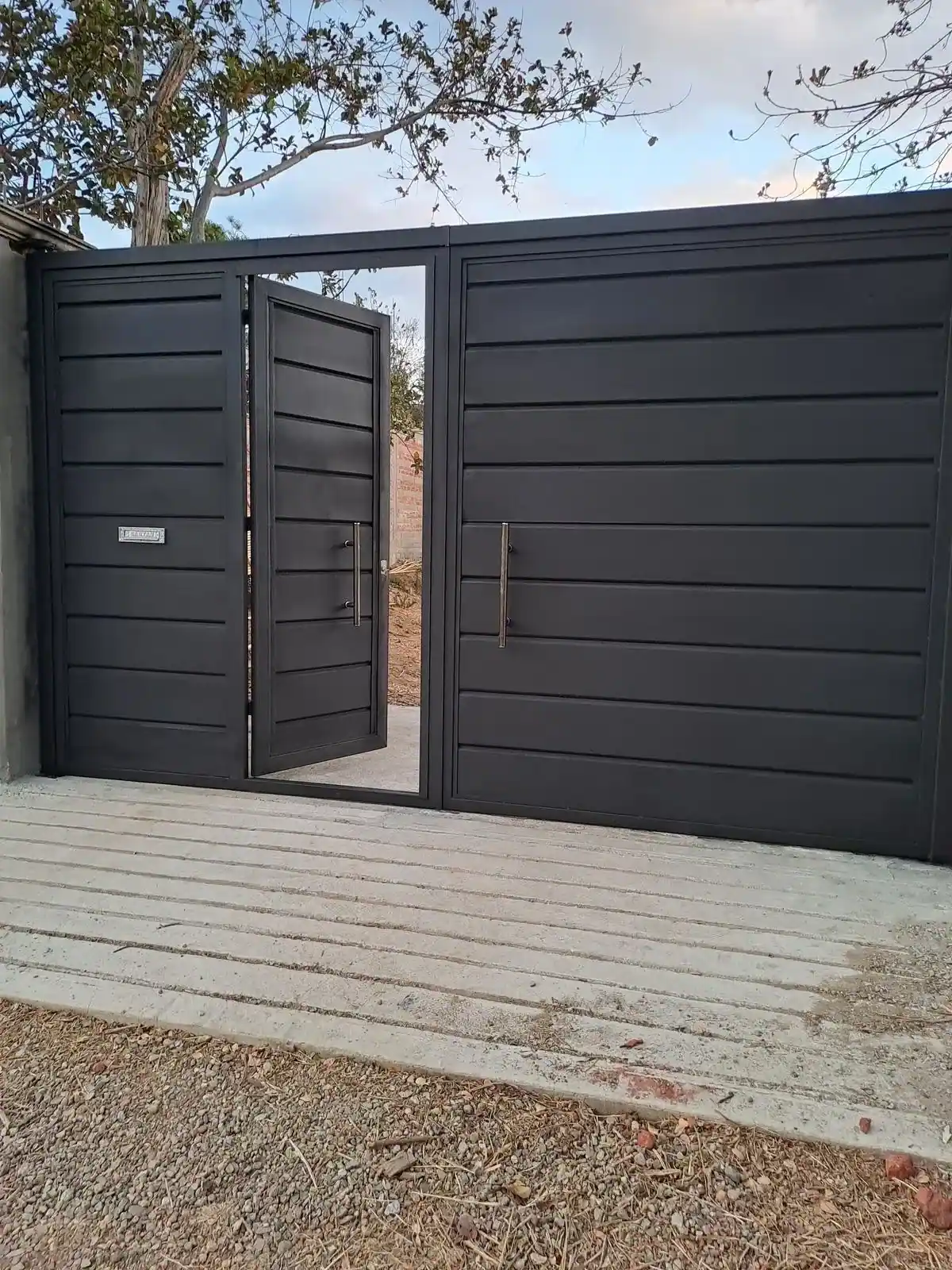
Series-Matched Slatted Pedestrian Gate
Villa Pedestrian Gates · Anthracite gray (RAL 7016)

Series-Matched Wrought Iron Pedestrian Gate
Villa Pedestrian Gates · Matte black, patina optional

Glass Canopy and Winter Garden
Canopies and Pergolas · Anthracite, black or white profiles
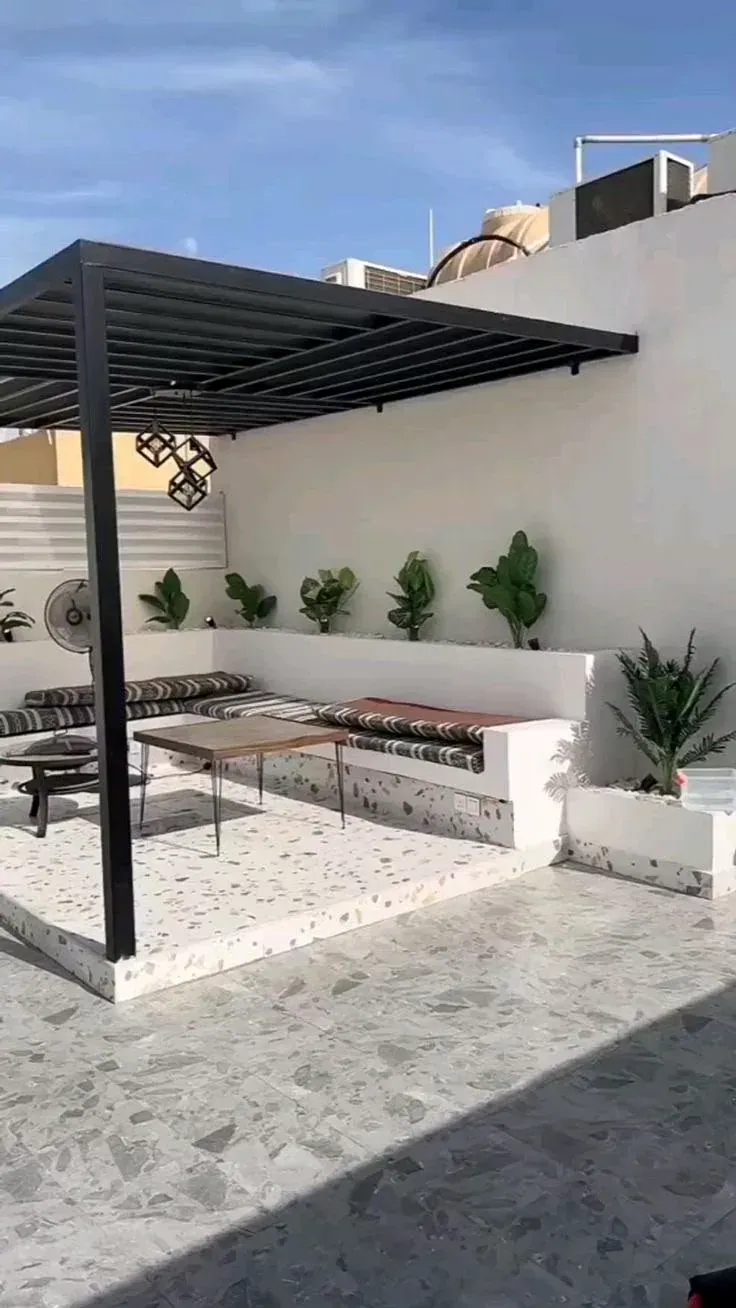
Carport and Entrance Canopy
Canopies and Pergolas · Anthracite, black or RAL of your choice
06Delivery and installation
How do we get from Arnavutköy to Izmir?
Shipments from Arnavutköy to Izmir are planned; parts are prepared in sizes suited to transport. If a holiday community has vehicle entry permits or installation-hour restrictions, the plan is built around them.
On coastal jobs, measuring takes a single visit; the plot’s distance from the sea and its exposure to the prevailing wind are noted on the same visit. Because of the distance, parts are prepared in sizes suited to transport. Installation time depends on community rules and access; we state the exact number of days in the quote.
We have no branches or dealers; all fabrication is done in our own workshop in Arnavutköy. Price and lead time depend on the size of the job, the opening and the installation conditions — so we don’t quote a figure or a number of days up front here. Send your measurements and location, and we’ll work it out for your project.
07FAQ
Frequently asked questions for Izmir
Which material lasts longer at my seaside home?
Galvanized steel for the body, stainless steel fasteners and sealed ends on hollow sections. Detailing matters as much as the type of material: if a cut edge is left unprotected, even the best material deteriorates from there. That is why we finish cutting and drilling before painting.
My community’s management sets color and height restrictions. Can you adapt?
We can. Height, infill spacing and color can be adjusted to the standard design. Send us the specification you received from management; we will prepare the dimensioned drawing to match it and provide it in a form you can use in the approval process.
Is a pergola suitable for a holiday-home garden?
Yes; it is one of the most asked-about items on the coast. Two things are decisive here: wind load, because on open ground a pergola is subject to uplift; and material, because salty humidity accelerates wear. Send us your measurements and location, and we will decide together which section and surface treatment are right.
My plot is 300 meters from the sea. Do I still need galvanizing?
Most likely yes, but we set the scope according to exposure. Because salt is carried by the wind, the effect is not limited to seafront plots; what matters as much as distance is whether the facade is open to the prevailing wind. Send us your location and which way the facade faces, and we will work out the scope accordingly.
Why does sealing the ends of a box section matter?
Humid air getting inside a hollow section starts corrosion that cannot be seen from outside. The profile looks sound from the outside while thinning from within, and the problem is noticed only when its load-bearing capacity drops. Sealing the ends and leaving drainage where water could collect prevents this from the start; it costs almost nothing and makes a big difference.
Will my pergola have problems in the wind?
It will if it is not anchored correctly. On open ground and on the coast, the main force a pergola sees is uplift; the job of the posts and anchoring is to keep the structure from lifting. What goes on top is also an input to the calculation — fixed panels, adjustable slats and plants mean different loads. Send us the dimensions and the covering you have in mind, and we will set the section accordingly.